Why Do Japanese Courtyards Always Bring Us Peace? | XERLIFE+ Journal
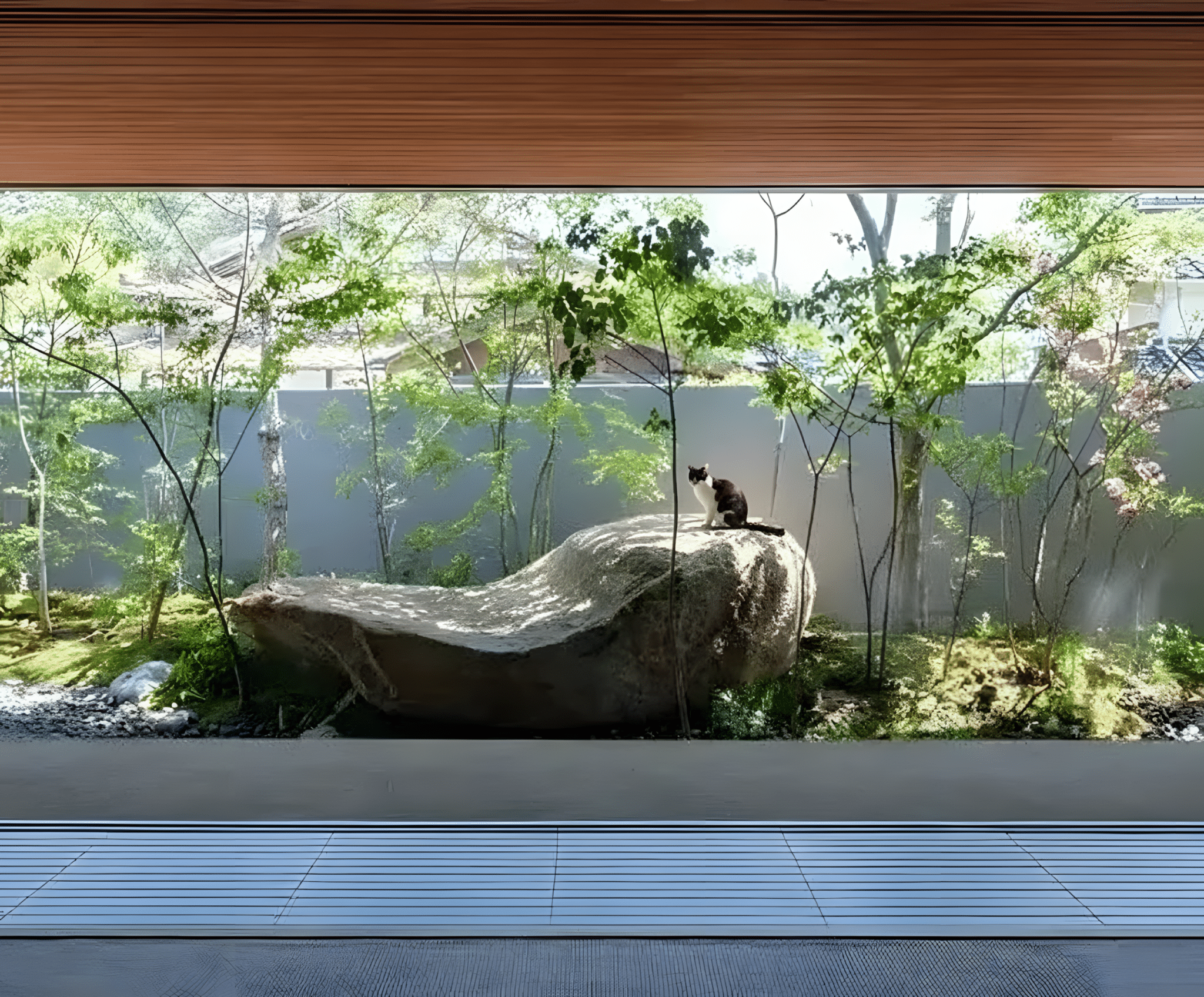
日式庭院为什么总能让人安静下来?不是因为景色有多丰富,而是因为它以极少的元素,建立了一种稳定而纯粹的观看方式。石、木、光、影,被放在恰到好处的位置;自然被框住,却从未被限制。
庭院不强调造景,而是通过秩序与留白,让人慢慢沉下来,与自然对话。
“借景”这一理念,最早来自中国园林的山水哲学。中国讲“远借、邻借、仰借、俯借”,用山水的格局和视线的层次,让人在行走中不断遇见新的景。
日本吸收了这套思想,却发展出更克制的表达:用“界”与“间”去控制视线,用有限的空间容纳更大的自然。
你眼前的这一幕,就是两种美学的交汇。日式的克制,让自然成为画;中国的“势”,让心境被引导。借景,不是借来某个物件,而是借自然的秩序,让空间延伸成一种心境。
Why do Japanese courtyards always bring us such profound peace? It is not because the scenery is abundant, but because it establishes a stable and pure way of seeing through minimal elements. Stone, wood, light, and shadow are placed with surgical precision; nature is framed, yet never confined.
A courtyard does not merely emphasize landscaping; instead, it uses order and “Ma” (negative space) to allow one to settle down and enter a silent dialogue with nature.
The concept of “Shakkei” (Borrowed Scenery) originated from the landscape philosophy of Chinese gardens. China emphasized “distant, neighboring, upward, and downward borrowing,” using the layout of mountains and waters to create a journey of constant discovery.
Japan adopted this philosophy but developed a more restrained expression: using “Kkai” (boundaries) and “Ma” (intervals) to control the line of sight, accommodating the vastness of nature within a limited space.
What you see here is the convergence of two aesthetics. Japanese restraint turns nature into a painting, while the Chinese sense of “Shi” (momentum/flow) guides the state of mind. “Borrowing scenery” is not about borrowing an object; it is about borrowing the order of nature, allowing space to extend into a state of soul.