Use neuroscience to explain that the blank space in Zen aesthetics is about “turning off” the prefrontal cortex.| XERLIFE+ Journal
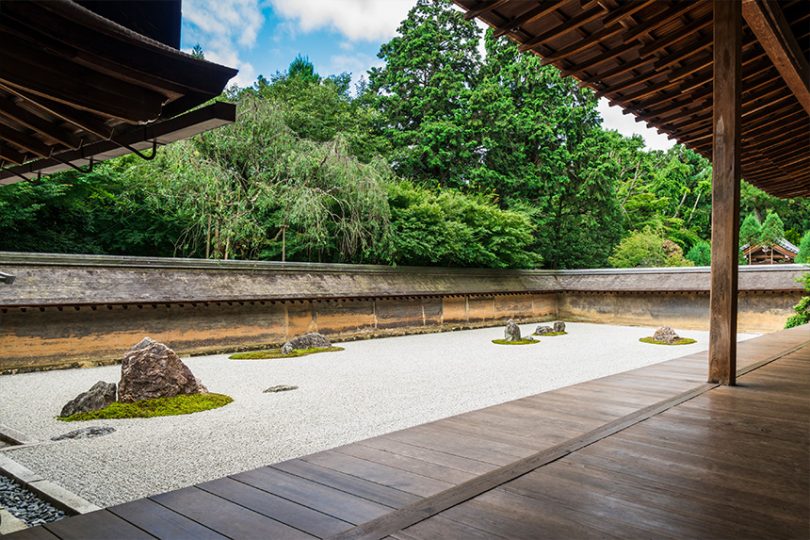
京都龙安寺。15块石头,一片白砂。什么都没有。为什么全世界的人坐在这里,看着一片空地,觉得比走进任何博物馆都震撼?这就是禅宗空间的力量——而它有神经科学的完整解释。
少即是多的大脑机制
禅寺只有一个视觉焦点(几块石头或一棵树),其他全是空白。现代设计讲究”丰富性”——图案、颜色、材质、灯光,层层叠叠。哪个让大脑更舒服?答案是:空的。少的信息量意味着低的认知负荷。禅宗空间之所以让人觉得”静”,是因为前额叶皮质终于不用处理一堆视觉信息了。它闲下来时,默认模式网络接管。这个网络跟自我反思、创造力、顿悟有关——所以我们才觉得”通透”。
砂纹 = 流动的静止
枯山水中的砂纹是一个天才设计。它同时满足两个互相矛盾的需求:秩序(整齐的纹路=可预测=安全)和流动(弯曲的线条=变化=有趣)。它既不是死寂的空白,也不是喧闹的丰富。它是”静止中的流动”——大脑最喜欢的中间态。
空间中的呼吸感
禅宗的”间”(Ma)——留白不是空,是能量暂停的地方。现代脑科学解释:在连续的信息流中插入”空白片段”,能让前额叶短暂归零,重新获得注意力资源。你的家不需要禅寺的极简,但可以从枯山水学一课:敢留白。真正的高级,不是加了什么。是没加什么。
Ryōan-ji in Kyoto. Fifteen stones. A field of white gravel. Nothing else. Why do people from all over the world sit here, looking at an empty space, and feel more moved than entering any museum? This is the power of Zen space — and neuroscience has a complete explanation for it.
The Brain Mechanism Behind Less Is More
A Zen temple has only one visual focal point (a few stones or a single tree); everything else is blank. Modern design emphasizes “richness” — patterns, colors, materials, lighting layered upon each other. Which makes the brain more comfortable? The answer is: the empty one. Less information means lower cognitive load. Zen spaces feel “quiet” because the prefrontal cortex finally doesn’t have to process a flood of visual information. When it rests, the Default Mode Network takes over. This network is associated with self-reflection, creativity, and insight — which is why we feel a sense of “clarity.”
Gravel Ripples = Flowing Stillness
The gravel patterns in a karesansui (dry landscape garden) are a genius design. They simultaneously satisfy two contradictory needs: order (neat patterns = predictable = safe) and flow (curved lines = change = interesting). It is neither dead stillness nor noisy richness. It is “flow within stillness” — the brain’s favorite intermediate state.
The Sense of Breath in Space
The Zen concept of “Ma” — negative space is not emptiness; it is a place where energy pauses. Modern neuroscience explanation: inserting “blank segments” into a continuous stream of information allows the prefrontal cortex to briefly reset, regaining attentional resources. Your home doesn’t need the minimalism of a Zen temple, but you can learn one lesson from the dry garden: dare to leave space empty. True sophistication isn’t in what you add. It’s in what you don’t add.