Why Your Home Makes You Anxious: The Neuroscience Answer | XERLIFE+ Journal
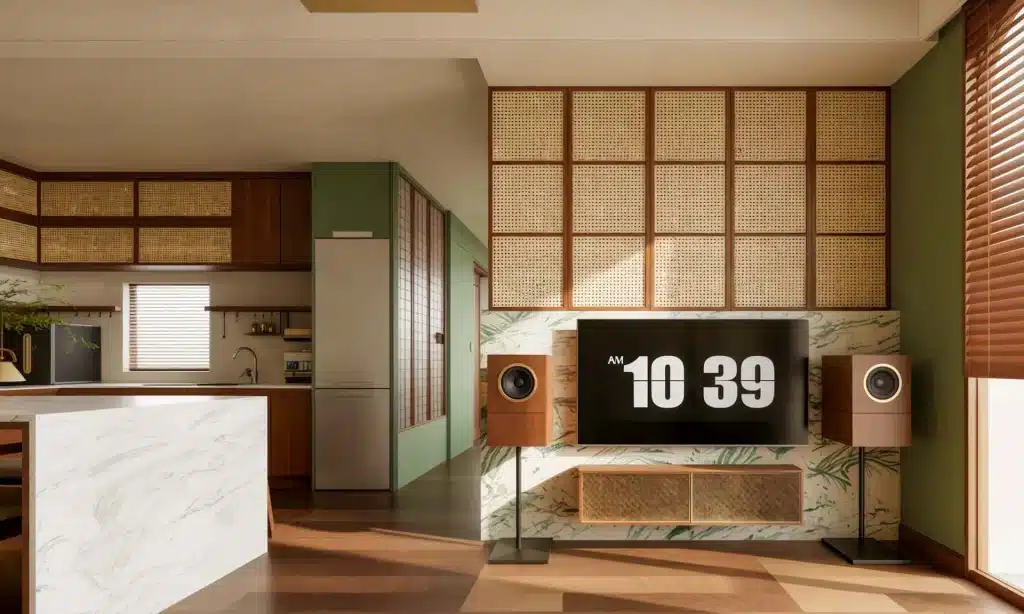
你有没有这种体验?下班回到家,按理说应该放松,但你坐在沙发上,脑子里还是一团乱麻。或者躺在床上,明明很累,就是睡不着。你可能觉得是自己压力太大。但有没有可能——是你的家在无声地消耗你?
即使在休息状态,你的大脑也在持续扫描环境。这个扫描系统叫默认模式网络(Default Mode Network)。当环境是安全的、可预测的,它让大脑进入恢复模式——整合记忆、处理情绪、生成创意。这就是为什么好点子在散步或洗澡时冒出来。但当环境充满”威胁信号”——杂乱、强光、噪音、拥挤——杏仁核被持续激活,默认模式网络无法正常工作。你的大脑不是在休息,是在持续警戒。
三个最常见的”空间焦虑源”:第一,视觉噪音。桌面上的杂物、墙角堆的快递箱、衣柜半开的门——每一个未整理的视觉元素都在向大脑发送”未完成”信号。前额叶被迫分出一部分算力去”记住这些待办事项”。
第二,不当的光线。晚上开着刺眼的白光顶灯,直接抑制褪黑素分泌。你的生物钟被打乱,身体不知道该放松还是该工作。暖色间接光源才是夜晚的正确选择。
第三,缺乏”退缩空间”。如果你的家里没有一个可以”躲进去”的角落——一个尺度小、包裹感强、光线柔和的地方——你的神经系统就没有”安全基地”。这在环境心理学中叫Refuge(庇护所),是人类最原始的空间需求。
三步空间自检:减少视觉噪音——把能看到的所有非必要物品放进柜子。不是要你家徒四壁,而是减少大脑需要处理的信息。调整光线层级——白天用自然光加百叶帘控制明暗,晚上只用2700K以下的暖色间接光。做一个退缩角落——哪怕只是一把舒服的椅子加一盏落地灯加一面书架围合,给神经系统一个安全基地。
空间不应该消耗你。它应该是你精神能量的充电桩。
Have you ever had this experience? You come home after work, supposedly to relax, but you sit on the sofa and your mind is still a mess. Or you lie in bed, exhausted yet unable to sleep. You might think it’s just stress. But what if—your home is silently draining you?
Even at rest, your brain keeps scanning the environment. This scanning system is called the Default Mode Network. When the environment is safe and predictable, it allows the brain to enter recovery mode—consolidating memories, processing emotions, generating creative ideas. That’s why good ideas pop up during a walk or a shower. But when the environment is full of “threat signals”—clutter, harsh light, noise, crowding—the amygdala stays activated and the DMN can’t function. Your brain isn’t resting; it’s on constant alert.
Three common “spatial anxiety triggers”: First, visual noise. Items on the desk, delivery boxes stacked in the corner, the half-open wardrobe door—every unorganized visual element sends an “unfinished” signal to your brain. The prefrontal cortex is forced to allocate processing power to “remember these to-do items.”
Second, inappropriate lighting. Harsh white overhead lights at night directly suppress melatonin. Your circadian rhythm gets disrupted—your body doesn’t know whether to relax or work. Warm indirect light is the correct choice for evening.
Third, lack of a “retreat space.” If your home has no corner to “hide in”—a small-scale, enveloping spot with soft light—your nervous system lacks a “secure base.” In environmental psychology, this is called Refuge, one of humanity’s most primal spatial needs.
Three-step spatial self-check: Reduce visual noise—put everything non-essential behind doors. It’s not about emptiness, it’s about reducing the information your brain has to process. Layer your lighting—natural light with blinds during the day; only warm indirect light below 2700K at night. Create a retreat corner—even just a comfortable chair, a floor lamp, and a bookshelf enclosure gives your nervous system a secure base.
Your space shouldn’t drain you. It should be the charging station for your mental energy.
Related Reading