Wabi-Sabi: The Final Bloom of Taoist Philosophy in Japan | XERLIFE+ Journal
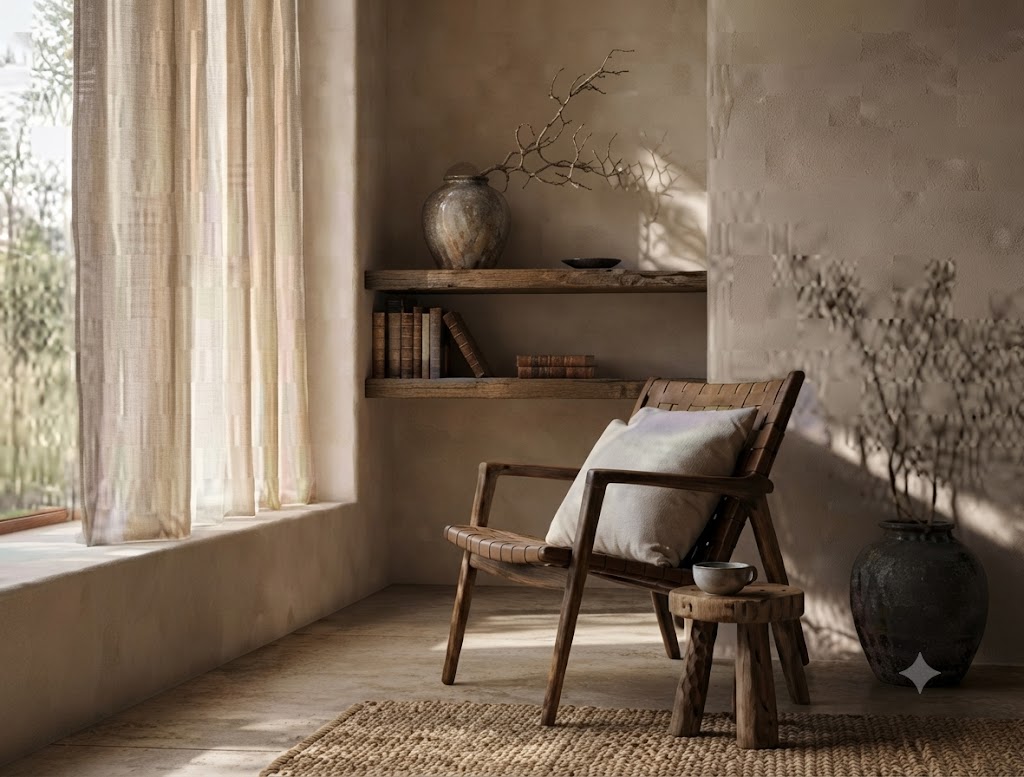
如果说道家思想是中国空间哲学的一颗种子,那么侘寂就是它在日本土壤里开出的一朵花。侘寂(Wabi-sabi)的根,深扎在道家、禅宗和日本茶道三股文化之中,而它和道家的亲缘关系,比很多人以为的更深——深到几乎可以看作道家空间思想的海外升级版。
先说什么是侘寂。这不是一种破旧风格,不是把墙刷成斑驳的样子就叫侘寂。侘(Wabi)的本质是简朴中的丰沛——去掉一切多余之后,剩下的反而更饱满。寂(Sabi)的本质是时间的美——器物在使用中磨损、生锈、变色的痕迹,不是折旧,是时间的签名。这两个词加在一起:不追求完美,不惧怕衰老,在简朴和不完美中发现深刻的美。
这和道家的返璞归真几乎是一回事。庄子说过一个著名的故事:一个木匠遇到一棵巨大的老树,树干扭曲、满是疤痕,别人都说这是废材。木匠说:正因为它无用,才活到了这么大——有用之木早已被砍去当梁柱了。无用之用正是侘寂的核心美学。一盏有裂纹的茶碗,正因为它不完美,反而成为独一无二的存在。
从脑科学的角度,侘寂的不完美美学恰好击中了感觉适应机制。完美平滑的表面让触觉感受器迅速疲劳——你的手指滑过一面完美瓷砖,平滑到没有信息。但一个有手工痕迹的陶碗——微微的凹凸、自然的釉色流淌、不规则的口沿——每一次触摸都在提供新的触觉信息,大脑始终保持轻微的新鲜感。这就是为什么侘寂器物让人越看越舒服、越摸越想摸——它永远不会被你完全适应完。
侘寂给我们的空间启示,是三句话。第一,接受时间的痕迹。不要怕家里的东西变旧。实木桌面有了划痕,那不是瑕疵,是你们家三年来在上面吃过的早餐、写过的作业、放过的那杯酒。空间的价值不在崭新,在有故事。第二,少即是多。去掉一切不是你真正需要的东西。侘寂不鼓励清贫,而是鼓励你问自己:这个东西,我拿起来的时候,心跳有没有变慢?如果没有——它可能是噪音。第三,把不完美摆在你每天能看到的地方。一把旧椅子、一个歪口的陶罐、一块保留自然边缘的木砧板——每天看到它们,你每天都被提醒:不需要完美,也可以被珍视。这是空间对你最温柔的心理暗示。
侘寂和道家本质上是同一件事,用不同的语言说出来的:世界本来就不完美,而正是这不完美,让万物有了独一无二的价值。你的家也是。
If Taoist thought is a seed in the garden of Chinese spatial philosophy, wabi-sabi is the flower it bloomed in Japanese soil. The roots of wabi-sabi run deep into three streams: Taoism, Zen, and the Japanese tea ceremony. And its kinship with Taoism is deeper than most people realize — deep enough that it can almost be seen as Taoist spatial thought, upgraded overseas.
First, what wabi-sabi actually is. It is not a shabby style. Painting a wall to look mottled is not wabi-sabi. Wabi means abundance within simplicity — once everything superfluous is removed, what remains feels fuller. Sabi means the beauty of time — the marks of wear, rust, and discoloration on objects in use are not depreciation; they are time’s signature. Put together: don’t pursue perfection, don’t fear aging, and discover profound beauty in simplicity and imperfection.
This is nearly identical to the Taoist return to the uncarved block. Zhuangzi tells a famous story: a carpenter meets a huge old tree, trunk twisted and scarred; everyone calls it useless. The carpenter says: precisely because it was useless, it grew this old — the useful trees were cut down long ago for beams. The use of the useless is the core aesthetic of wabi-sabi. A tea bowl with a crack, precisely because it is imperfect, becomes one of a kind.
From a neuroscience perspective, wabi-sabi’s aesthetic of imperfection hits the sensory adaptation mechanism exactly. A perfectly smooth surface tires your tactile receptors quickly — your fingers glide over a flawless tile, so smooth there’s no information. But a handcrafted ceramic bowl — slight undulations, natural glaze flow, an irregular rim — every touch delivers new tactile information, and the brain keeps a mild sense of novelty. This is why wabi-sabi objects feel more comfortable the more you look, and more enticing the more you touch — you can never fully adapt to them.
Wabi-sabi’s spatial lessons come in three sentences. First, accept the traces of time. Don’t fear things growing old. A solid wood table with scratches is not a flaw — it’s the breakfasts eaten on it for three years, the homework written on it, the glass of wine set down on it. The value of a space is not in newness, but in stories. Second, less is more. Remove everything you don’t truly need. Wabi-sabi doesn’t preach poverty — it asks you: when I pick this thing up, does my heartbeat slow down? If not — it might be noise. Third, put imperfection where you see it every day. An old chair, a crooked ceramic jar, a wooden cutting board with its natural edge — seeing them daily, you’re reminded every day: you don’t need to be perfect to be cherished. This is the gentlest psychological suggestion a space can give you.
Wabi-sabi and Taoism are essentially the same thing, said in different languages: the world is inherently imperfect — and it is precisely this imperfection that gives everything its unique value. Your home too.