The Great Form Has No Shape: Why the Best Spaces Have No Theme | XERLIFE+ Journal
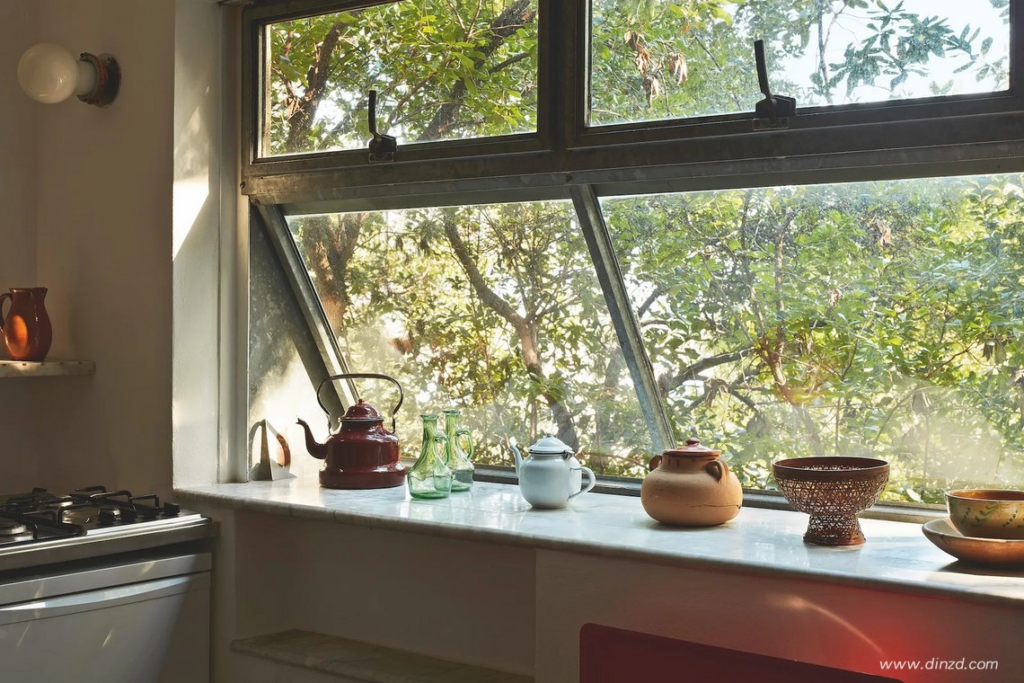
你在社交媒体上一定见过这种空间:波西米亚风、工业风、侘寂风、新中式、奶油风……每一种风格都有一套完整的视觉语法。你可以照着一篇小红书笔记把家装成一个”样板”。但你有没有发现:一个被严格装成某种”风”的空间,住三个月就腻了?
《道德经》第四十一章:”大白若辱,大方无隅,大器晚成,大音希声,大象无形。”最极致的美,没有固定的形态。最厉害的空间,没有一个可以被命名的”风格”。它不是北欧风、不是日式、不是中式——它是你的风格
从神经科学角度解释这个现象,核心在于”认知归类”和”神经适应”的关系。当一个空间有一个鲜明的风格标签——比如”工业风”——你的大脑立刻把它归入一个既有认知框架:裸露的天花板=酷,铁件=硬朗,混凝土=现代。归类完毕,大脑不再花时间”感受”这个空间,而是直接调用预制判断。你表面上觉得”很喜欢”,实际上你的神经系统根本没参与进来。三个月后,你的大脑已经完全适应了这个标签,不再释放任何情绪信号。你开始觉得”无聊”。
这就是风格的陷阱——它帮你快速做决定,却阻碍你持续感受。而”大象无形”的空间——你无法一眼判断它是什么风——迫使你的大脑放弃标签归类,转而用更原始的方式去感知:光线、温度、尺度、材质、声音。这些感官信号绕过了风格标签,直接作用于边缘系统,产生真实的情绪反应。你每次走进去都不是”它是什么风格”,而是”我现在感觉怎么样”。
做”无形”空间的三个方法。第一,混搭但不冲突:不是把所有风格怼在一起。而是在颜色、质感、尺度三个维度上找到”统一”——不同的形,相似的质。一把明代圈椅 + 一张现代混凝土茶几,只要它们的颜色在同一调性里,就不会违和。第二,不求”风格统一”求”你统一”:空间的主线不是某种风格的语法,是你本人。你旅行带回的毯子、奶奶留下的碗、你喜欢的唱片机——它们属于不同的”风”,但它们都是你。第三,留出”可生长”的空间:不要一次性填满。留白让未来的你参与进来。好的空间不是一张完稿,是一本还在写的书。
大象无形,不是没有形。是有形但不被形所困。你的家不是某个风格的定义,是你所有生活痕迹的总和。
You’ve definitely seen these spaces on social media: bohemian, industrial, wabi-sabi, neo-Chinese, cream… Every style has a complete visual grammar. You can follow a Xiaohongshu post and turn your home into a “showcase.” But have you noticed: a space strictly styled as some “look” bores you within three months?
Chapter 41 of the Tao Te Ching: “The greatest whiteness appears stained; the greatest square has no corners; the greatest vessel is finished late; the greatest sound is silent; the greatest form has no shape.” The most extreme beauty has no fixed form. The greatest space has no style you can name. It’s not Nordic, not Japanese, not Chinese — it’s yours.
Neuroscience explains this through the relationship between “cognitive categorization” and “neural adaptation.” When a space carries a clear style label — say “industrial” — your brain immediately files it into an existing framework: exposed ceiling = cool, ironwork = rugged, concrete = modern. Once categorized, the brain stops spending time “feeling” the space and simply calls up prefabricated judgments. On the surface you think “I love it,” but your nervous system never actually participated. Three months later, your brain has fully adapted to the label and releases no more emotional signals. You start to feel “bored.”
This is the trap of style — it helps you decide fast but stops you from feeling continuously. A “formless” space — one you can’t instantly classify — forces your brain to abandon labeling and perceive in a more primal way: light, temperature, scale, material, sound. These sensory signals bypass the style label and act directly on the limbic system, producing genuine emotional responses. Each time you walk in, the question isn’t “what style is it?” — it’s “how do I feel right now?”
Three methods for building a “formless” space. First, mix without clashing: don’t pile all styles together. Instead, find unity across three dimensions — color, texture, scale: different forms, similar qualities. A Ming-dynasty horseshoe chair and a modern concrete coffee table — as long as their colors sit in the same tone, they won’t clash. Second, pursue not “style consistency” but “you-consistency”: the main line of the space is not the grammar of some style — it’s you. The blanket you brought back from travel, the bowl your grandmother left you, the record player you love — they belong to different “styles,” but they’re all you. Third, leave room to “grow”: don’t fill everything at once. The empty space lets your future self participate. A good space isn’t a finished manuscript — it’s a book still being written.
The great form has no shape — not “no form,” but having form without being confined by it. Your home isn’t the definition of some style; it’s the sum of all the traces of your life.