Reversal Is the Movement of Dao: Why Opposites Make a Space Complete | XERLIFE+ Journal
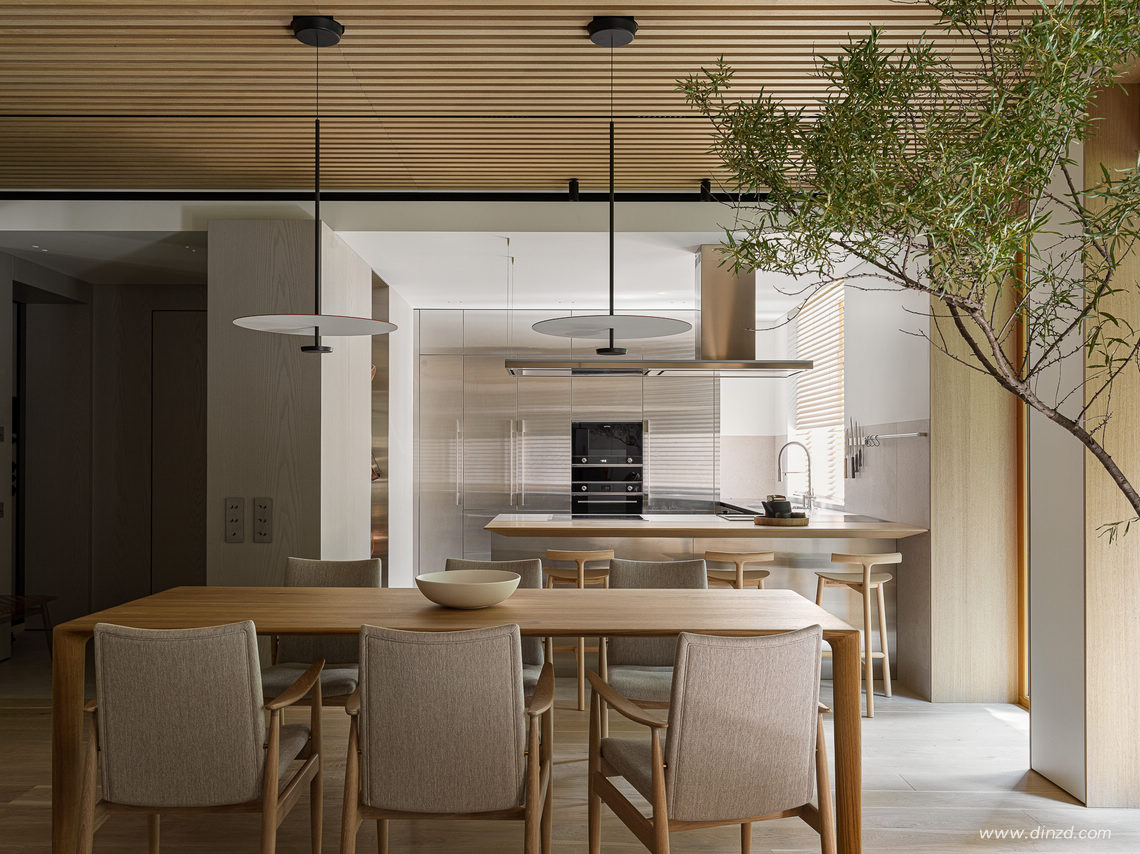
你有没有发现:全屋暖色调,审美疲劳得很快,全屋极简白,住久了觉得冷。全屋柔软面料,没过半年就想换硬一点的材质。这不是你善变,这是你的大脑在求救——它需要”相反的东西”。
《道德经》第四十章:”反者道之动,弱者道之用。”这句话翻译成现代空间哲学就是:一个空间的生命力,不来自它”做到极致”,而来自它内部的对立统一。没有冷就感觉不到暖,没有硬就体会不到软,没有空就意识不到满。空间的”好”不是绝对的,是相对的。
神经科学有一个概念叫”感觉适应”(Sensory Adaptation):当一个刺激持续不变,你的感受器会逐渐降低敏感度。全屋暖色,住了一周之后你的眼睛已经”适应”了暖色,再也感受不到温暖——只剩下平淡。但如果客厅是暖木色,转角遇到一间冷灰色的书房,视觉对比重新激活了你的色觉感受器。那个”暖”才真正被”体会”到了。
阴阳不是玄学,是三个设计法则。第一,冷暖对置:不要让全屋温度在一个区间。主空间暖木+藤编,角落空间用冷调石材或深蓝点缀。你的身体会无意识地在这两个区域之间找到平衡。第二,硬软交替:全屋软装容易让人萎靡——缺少对抗力。在柔软的空间里放一把硬木椅、一张石材茶几,触觉的反差会唤醒身体的警觉度和活力感。第三,明暗节奏:窗户全开不是最好选择。百叶窗制造的条纹光影、角落的暗区、一盏只照亮局部的灯——明暗交替让空间有了呼吸的节奏。
就像一首好音乐,不是只有一个音符。空间的韵律在于对比与统一之间的张力。”反”不是破坏,”反”是让”正”被真正感知到。
Have you noticed? A home that is all warm tones quickly becomes aesthetically tiresome. All minimalist white feels cold after a while. All soft fabrics — within half a year you want harder materials. You’re not fickle. Your brain is asking for help — it needs “the opposite.”
Chapter 40 of the Tao Te Ching: “Reversal is the movement of Dao; weakness is the function of Dao.” Translated into modern spatial philosophy: the vitality of a space doesn’t come from being “pushed to the extreme,” but from the unity of opposites within it. Without cold you can’t feel warmth; without hard you can’t appreciate soft; without empty you can’t perceive full. The “goodness” of a space is not absolute — it’s relative.
Neuroscience has a concept called “sensory adaptation”: when a stimulus stays constant, your receptors gradually lower their sensitivity. In an all-warm home, after a week your eyes have “adapted” to the warmth — you no longer feel it, only flatness. But if the living room is warm wood, and turning a corner you enter a cool gray study, the visual contrast reactivates your color receptors. Only then is the “warmth” truly “felt.”
Yin and yang are not mysticism — they are three design rules. First, warm-cold opposition: don’t let the whole home stay in one temperature range. Main spaces in warm wood and rattan; corner spaces accented with cool stone or deep blue. Your body will unconsciously seek balance between the two zones. Second, hard-soft alternation: an all-soft interior makes people listless — it lacks resistance. Put a hardwood chair or a stone coffee table in a soft room; the tactile contrast awakens your body’s alertness and vitality. Third, light-dark rhythm: fully open windows are not always best. The striped shadows of blinds, a dark corner, a lamp that illuminates only one spot — alternating light and dark gives a space the rhythm of breathing.
Like a good piece of music, it’s not just one note. The rhythm of a space lives in the tension between contrast and unity. “Reversal” is not destruction — reversal is what lets the “positive” be truly perceived.