The Highest Virtue Is Like a Valley: High Ceilings Open the Mind | XERLIFE+ Journal
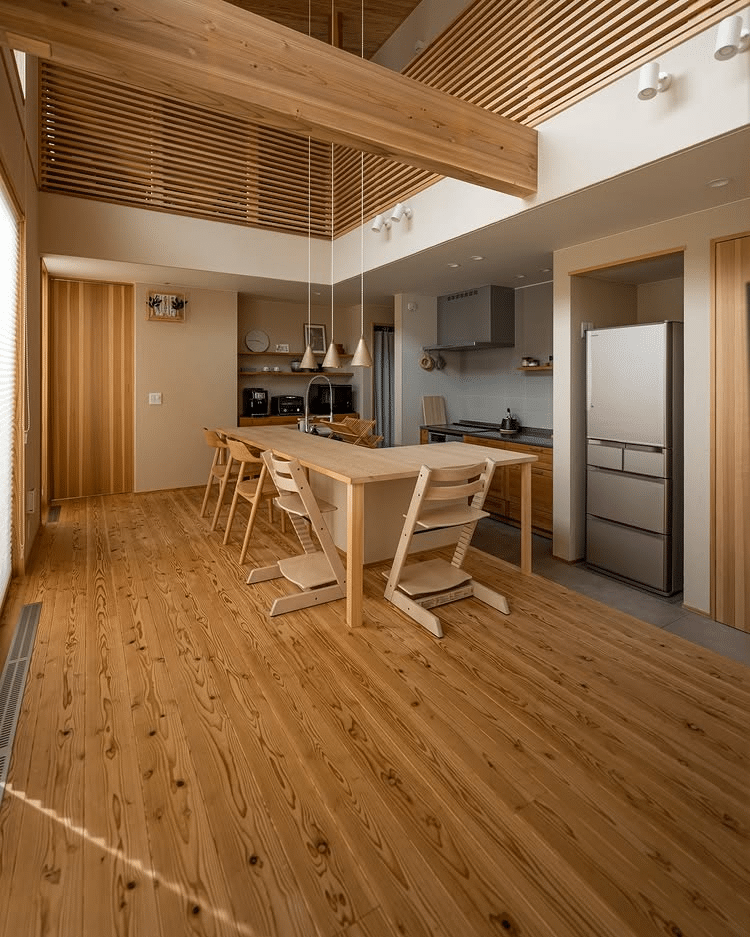
你有没有发现:走进层高很高的大堂或美术馆,人会不自觉地抬头、深呼吸、放慢脚步;而走进天花板低矮的房间,没一会儿就想坐下、低头、刷手机。同样是房间,高度不同,人的状态完全不同——空间的高度,正在悄悄改变你的想法。
老子在《道德经》第四十一章说:”上德若谷,大白若辱,广德若不足。”最高的德行,就像山谷一样:虚怀、低洼、空旷。大白若辱——最洁白的反而像有污点;广德若不足——最充足的德行反而显得不够。老子用”谷”来形容最高级的境界:不填满,留空。山谷从不炫耀自己的深,却容纳了整座山的雨水和回声。
为什么”空”和”高”如此重要?因为大脑对空间的感知,直接影响它怎么思考。脑科学研究普遍发现,开阔的空间会激活与空间感知相关的脑区,让人感到”有退路、有选择”,压力和局促感随之下降;同时,高天花板的环境更容易激发抽象思维和发散联想,适合想问题、做规划,而低矮的天花板则让人更专注细节,适合处理具体事务。换句话说:天花板的高度,在替你家的大脑选工作模式。
设计上,三件事值得做。
第一,把层高”用”出来。能挑空就挑空,把楼上楼下打通,空间立刻有了”气”;没有挑空条件,就用竖向线条、通顶柜、细长的窗帘杆,把视线往高处引,让空间”显高”。
第二,用低矮家具反衬开阔。矮沙发、矮茶几、落地床,家具越低,天花板在对比之下显得越高——低姿态,反而撑起了整个空间的高度感。
第三,保证视线通道。从门口到窗边,别让高柜、隔断切断视线。眼睛看得越远,心里越敞亮;一道通透的视线,是家里最便宜的”挑空”。
注意,这三件事不是豪宅的专利,普通户型照样能做。先留空,再谈装饰;先通视线,再摆家具。
做人要虚怀若谷,做家也要留出山谷般的空。那些没有被家具填满的地方,才是真正养人的地方。
你的家不是用来看的,是用来养你的大脑的。
Have you noticed: entering a grand lobby or an art museum with very high ceilings, people unconsciously lift their heads, take deep breaths, and slow their steps; while in a room with a low ceiling, before long you want to sit down, lower your head, and scroll your phone. The same room, different heights — people behave completely differently. The height of a space is quietly changing the way you think.
In Chapter 41 of the Tao Te Ching, Laozi says: “The highest virtue is like a valley; the purest white seems stained; the fullest virtue seems insufficient.” The highest virtue is like a valley: open-minded, low-lying, vast. The purest white seems to bear a stain; the most abundant virtue appears lacking. Laozi uses the valley to describe the supreme state: not filled, but left open. The valley never boasts of its depth, yet it holds all the rain and echoes of the mountain.
Why are “emptiness” and “height” so important? Because the brain’s perception of space directly shapes how it thinks. Brain science consistently finds that open spaces activate brain regions related to spatial perception, making people feel “there’s an escape route, there are options,” lowering pressure and constriction; meanwhile, high-ceiling environments more readily stimulate abstract thinking and divergent association — good for pondering problems and making plans — while low ceilings make people focus on details, suited for concrete tasks. In other words: the height of your ceiling is choosing the working mode for your brain.
In design, three things are worth doing.
First, “use” the ceiling height. Double-height voids where possible — open up the floor above and below, and the space instantly gains “air.” Without the option, use vertical lines, full-height cabinets, and slender curtain rods to draw the eye upward and make the space “read tall.”
Second, let low furniture make the space feel grander by contrast. Low sofas, low coffee tables, platform beds — the lower the furniture, the higher the ceiling appears in comparison. A low posture actually props up the whole room’s sense of height.
Third, protect sightlines. From the door to the window, don’t let tall cabinets or partitions cut the view. The farther the eye can see, the brighter the heart feels; an unobstructed sightline is the cheapest “double-height void” in a home.
Note: none of these three things are the privilege of luxury homes — ordinary floor plans can do them all. Leave space empty first, then talk about decoration; open the sightlines first, then arrange furniture.
Be open-minded like a valley as a person, and leave a valley-like emptiness in your home. The places not filled with furniture are the places that truly nourish people.
Your home is not for looking at — it is for nurturing your brain.