Good Deeds Leave No Tracks: The Easiest Homes to Live In Are the Ones You Don’t See | XERLIFE+ Journal
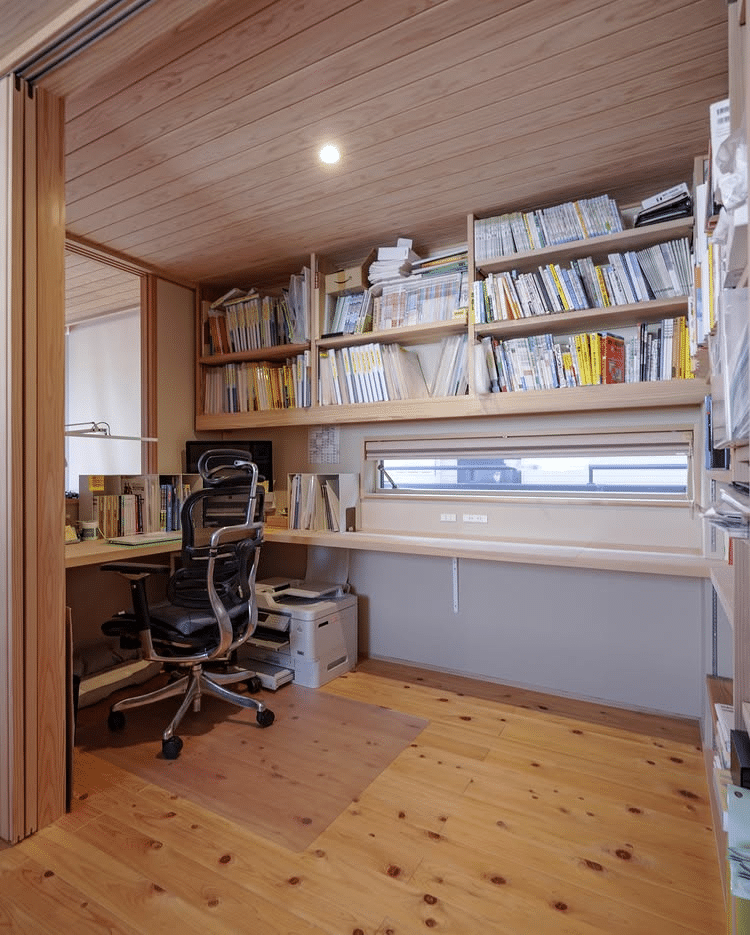
你有没有这种时刻:推开家门,目光扫过满墙的柜子把手、抽屉缝隙、插座线头、杂物边缘——明明什么都没干,却莫名觉得累。家本来不是用来”看”的展览,可我们往往把它住成了”陈列”:每一样东西都在招手,让眼睛挨个打招呼。
老子在《道德经》第二十七章说:”善行无辙迹,善言无瑕谪。”善于行走的人,不留车辙脚印;善于说话的人,没有瑕疵毛病。高手做事,不着痕迹。放到家里:真正高级的收纳,是让你感觉不到”收纳”的存在——东西都在,秩序都在,但你一个都看不见。
为什么”看不见”能省力?因为大脑的注意力是有限的资源。研究普遍发现,视觉上杂乱的环境会持续占用注意资源——哪怕你没有盯着那些东西看,大脑也在默默”清点”它们:这是什么?该不该归位?有没有危险?每一次无意识的登记,都在消耗认知负荷,积少成多,一天下来就是一笔不小的”注意力税”。这也解释了为什么酒店大堂、高级餐厅总爱把杂物藏得严严实实:不是怕人看见,是怕大脑看见。相反,当视线所及之处干干净净、看不出”东西从哪来、到哪去”,大脑就省下了这一整笔开销,人自然觉得安静、清爽。
这就是隐形设计的哲学,四步走。
第一,隐形门。门和墙面同色同材质,做成一体,关上门就是一面完整的墙。空间立刻少了好几道”口子”,墙面也变得连贯。
第二,嵌入式柜体。柜子嵌进墙体,与墙齐平,收纳的容量还在,视觉上却”消失”了。
第三,隐藏把手。用反弹器、暗拉手、下沿抠手替代明装拉手——少一个凸起,就少一个视觉锚点。
第四,无痕收纳。同类物品收进同色容器,标签朝内;线缆藏进踢脚线和桌下理线槽。不是没有东西,而是让东西不留下”辙迹”。
注意,这四步的核心不是”藏起来”,而是让收纳系统本身退到视线之外——收纳还在,负担没了。
高手做事不留痕迹,高手的家也一样:东西都在,却都看不见。
你的家不是用来看的,是用来养你的大脑的。
Have you ever had this moment: pushing open the front door, your gaze sweeps over cabinet handles lining the walls, drawer gaps, exposed cable ends, the edges of clutter — you’ve done nothing at all, yet you feel inexplicably tired. A home was never meant to be an exhibition “for looking at,” yet we often live in it as a “display”: every object waves for attention, and your eyes have to greet each one in turn.
In Chapter 27 of the Tao Te Ching, Laozi says: “A good walker leaves no tracks; a good speaker makes no slips.” Those skilled at walking leave no wheel ruts or footprints; those skilled at speaking leave no flaws. Masters act without leaving a trace. Applied to the home: truly superior storage is storage whose existence you never notice — everything is there, order is there, but you can’t see any of it.
Why does “invisible” save energy? Because attention is a limited resource. Research consistently finds that visually cluttered environments continuously consume attentional resources — even when you’re not looking at those things, the brain is silently “inventorying” them: what is this? Should it be put away? Is it dangerous? Every unconscious registration burns cognitive load; little by little it accumulates, and by the end of the day it amounts to a considerable “attention tax.” This also explains why hotel lobbies and fine restaurants hide clutter so thoroughly: it’s not that they fear people seeing it — they fear the brain seeing it. Conversely, when everything in view is clean and you can’t tell “where things come from or go,” the brain saves that entire expense, and people naturally feel quiet and refreshed.
This is the philosophy of invisible design — four steps.
First, invisible doors. Make the door the same color and material as the wall, integrated as one — closed, it becomes a complete wall. The space immediately loses several “openings,” and the wall becomes continuous.
Second, built-in cabinetry. Embed cabinets into the wall, flush with it — storage capacity remains, but visually it “disappears.”
Third, hidden handles. Use push-to-open mechanisms, recessed grips, or under-lip pulls instead of exposed handles — one less protrusion, one less visual anchor.
Fourth, traceless storage. Put like items into same-colored containers, labels facing inward; tuck cables into baseboards and under-desk cable trays. It’s not that there are no things — it’s that things leave no “tracks.”
Note: the core of these four steps is not “hiding things away” — it’s moving the storage system itself out of sight. The storage remains; the burden is gone.
Masters act without leaving traces, and so do masters’ homes: everything is there, yet none of it is seen.
Your home is not for looking at — it is for nurturing your brain.