An Empty Room Gives Birth to Light: The Emptier the Home, the Brighter the Brain | XERLIFE+ Journal
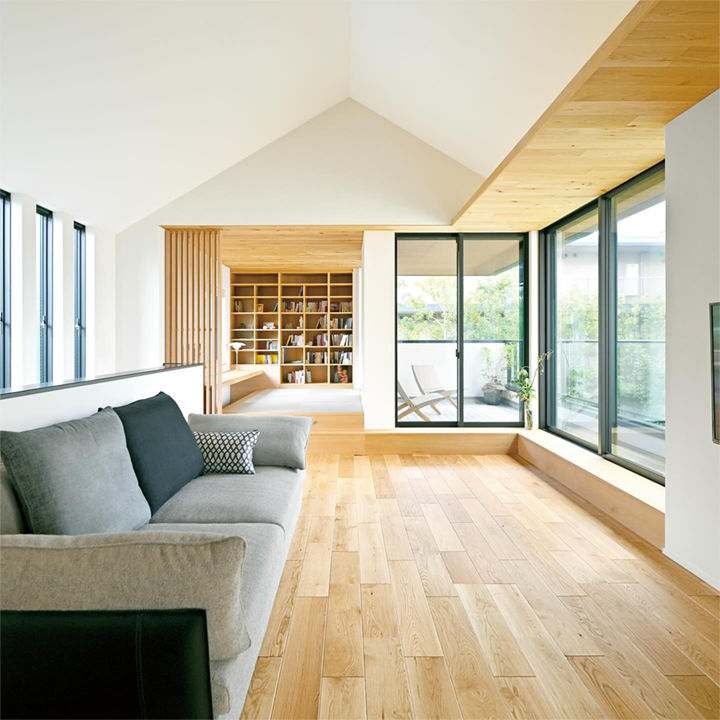
你有没有过这样的时刻:加班回到家,瘫在沙发上,明明什么都没干,却觉得脑子像一间堆满杂物的屋子,转都转不动?
庄子在《人间世》里说:”虚室生白,吉祥止止。”虚室,是空出来的房间;白,是光。房间空了,光才能照进来;心空了,好事才会留下来。庄子用八个字把”空”的价值讲到了底:空不是没有,是为光留出位置。两千年前庄子讲修心,今天看,它讲的也是装修。
脑科学给它配了一个注脚。你的大脑里有一个”默认模式网络”(DMN)——不专注任何任务时,它反而最活跃,负责走神、回忆、联想——你发呆、洗澡、散步时灵光乍现,都是它的功劳。但 DMN 有个前提:环境不能持续抢走注意力。
每一样多余的杂物、每一条复杂的装饰线,都在向大脑皮层发”处理我”的信号。研究普遍发现,杂乱环境会持续占用有限的注意力资源,让人更容易疲劳烦躁——你未必察觉,但大脑在替你一笔笔记账;而简洁留白的空间,更容易让人进入放松的 Alpha 脑波状态——”安静又清醒”的频道,正是修复与灵感同时发生的频道。
所以,最高级的家不是”填满”,而是”留得住光”。三个手法:
第一,留白留到”看不见墙”。柜子做嵌入式,台面清空,让视觉有一整块喘气的区域。留白不是空,是让目光有地方休息——就像文章里的句读,呼吸之间,节奏自现。
第二,几何要纯净。一面墙一种材质,一个空间一条主色。线条越少,大脑解析环境的成本越低,家就越静。
第三,从物理降噪做到精神降噪。隔音、吸音是第一步;把杂物收进看不见的柜子、把信息量降下来是第二步——电视墙简化,装饰画减到两三幅,让视线有终点。噪音不只来自窗外,也来自你的眼角余光。
虚室生白,放在今天就是:把空间腾出来,让大脑亮起来。这不是把生活过成极简主义,而是把注意力还给自己。
你的家不是用来看的,是用来养你的大脑的。
Have you ever had this moment: after overtime you collapse onto the sofa, having done nothing at all, yet your mind feels like a room stuffed with clutter — it won’t turn over.
In “The World of Men,” Zhuangzi says: “An empty room gives birth to light; good fortune comes to rest in stillness.” The empty room is a room cleared out; the light is illumination. When a room is empty, light can enter; when the heart is empty, good things stay. In eight characters, Zhuangzi said everything there is to say about the value of “emptiness”: empty is not nothing — it is making room for light. Two thousand years ago Zhuangzi was speaking of cultivating the mind; seen today, he was also speaking of interior design.
Brain science adds a footnote. Inside your brain is a Default Mode Network (DMN) — most active precisely when you’re focused on nothing, responsible for mind-wandering, memory, and association — the flashes of insight while staring into space, showering, or walking are its doing. But the DMN has one precondition: the environment must not keep stealing attention.
Every piece of extra clutter, every complicated decorative line, sends a “process me” signal to the cerebral cortex. Research consistently finds that cluttered environments continuously occupy limited attentional resources, making people more prone to fatigue and irritability — you may not notice, but the brain keeps the ledger for you; while simple, whitespace-rich spaces make it easier to enter the relaxed Alpha brainwave state — the “quiet and alert” channel, where repair and inspiration happen at once.
So the most sophisticated home is not “filled” — it is one that “holds the light.” Three techniques:
First, leave white space until you “can’t see the walls.” Build cabinets in, clear the countertops, and give the vision one whole region to breathe. White space isn’t emptiness — it’s a place for the gaze to rest, like punctuation in an essay: between breaths, rhythm appears.
Second, keep geometry pure. One wall, one material; one room, one primary color. The fewer lines, the lower the brain’s cost of parsing the environment, and the quieter the home.
Third, move from physical noise reduction to mental noise reduction. Soundproofing and sound absorption are step one; hiding clutter in unseen cabinets and reducing information load is step two — simplify the TV wall, cut the artwork down to two or three pieces, and give the eye an endpoint. Noise doesn’t only come from outside the window — it also comes from the corner of your eye.
“An empty room gives birth to light,” translated for today: clear out the space, and let the brain brighten. This is not turning life into minimalism — it is returning your attention to yourself.
Your home is not for looking at — it is for nurturing your brain.