The Curved Is Whole: Long Corridors Make You Hurry — Try a Bend | XERLIFE+ Journal
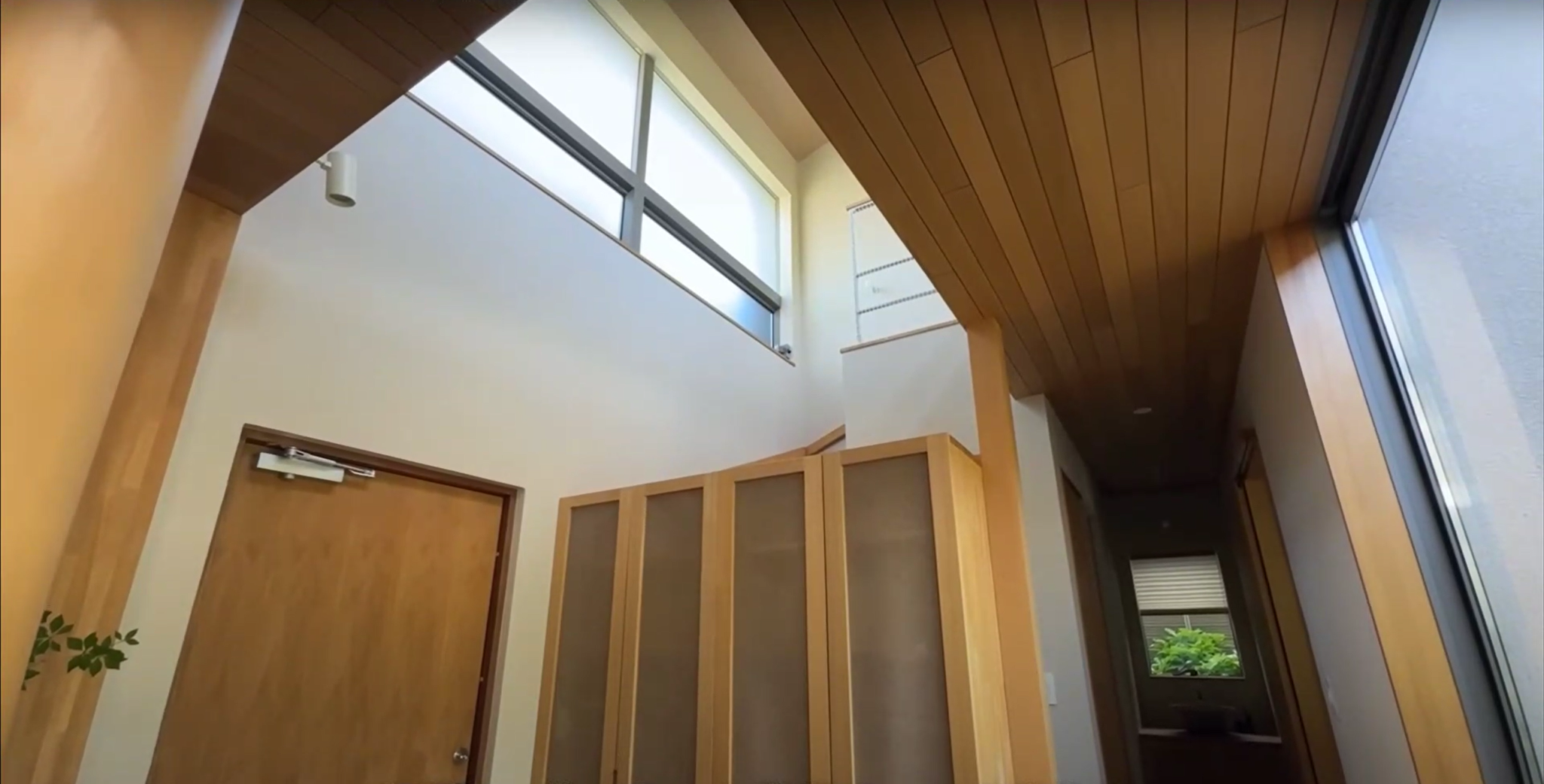
你有没有发现:有些房子的走廊,你走着走着就想加快脚步,恨不得三步并作两步冲过去;而有些房子,哪怕只是从客厅走到书房,你也会不自觉地慢下来,甚至想在转角停一停。
区别不在长短,在曲直。
老子在《道德经》第二十二章说:”曲则全,枉则直。”弯曲的反而能保全,委屈的反而能伸直。放到空间里:一条笔直到底的路线,看着最短,走起来却最累;一条有曲度的路线,看似绕了远,走起来却最舒服。
为什么?因为人的大脑,怕的不是远路,是单调。
研究普遍发现:能一眼望到底的单调环境,会让人产生明显的枯燥感和疲劳感——大脑接收不到任何新信息,注意力无处安放,反而更累。而带有曲线和轻微遮挡的路径,会不断给大脑抛出”下一段是什么”的小悬念,激活探索本能,走起来轻松、愉快,连时间感都会变短。脚步会不自觉地放慢,视线顺着弧线滑行,大脑不断收到轻微的新鲜刺激——不大不小,正好让人舒服。
曲线的妙处还在于”引导”:弧形不是让路变长,而是让视线有去处、脚步有节奏。直线是命令,曲线是邀请。
给你三个能落地的做法。
第一,走廊的尽头,别让它”一眼到底”。尽头放一幅画、一束灯光、一件器物,让视线先有个落脚点;转角处做成弧形,视线顺着弧线延续,脚步自然就慢下来。如果走廊实在很长,就用两三处转折把它切成段落,让大脑每走一段都有新的预期。
第二,把”死路”改成”洄游”。客餐厅之间如果能形成一条环形动线——从客厅进、绕书房一圈、从餐厅回——家里就没有走不通的角落,走动本身变成一种散步。而且人绕一圈回来再看同一个空间,又是全新的角度。
第三,用弧形家具围合出”弯”。客厅放一张弧形沙发,围出一个半圆的会客区,茶几安放在弧心。人坐在弧线里,视线有聚拢感,聊天、发呆都更自在。弧形转角不是为了防磕碰,是为了让路径有呼吸。
直线给效率,曲线给心情。一个家可以没有长廊,但不能没有一处弯。
你的家不是用来看的,是用来养你的大脑的。
Have you noticed: in some homes, walking down the corridor makes you quicken your pace, desperate to dash through it in three strides; in others, even the short walk from living room to study slows you down unconsciously — you might even pause at the turn.
The difference is not length — it’s straightness versus curvature.
In Chapter 22 of the Tao Te Ching, Laozi says: “The curved is whole; the bent is straight.” What bends survives whole; what yields straightens. Applied to space: a route that runs dead straight looks shortest but walks most tiringly; a route with curvature looks like a detour but walks most comfortably.
Why? Because what the brain fears is not long distances — it’s monotony.
Research consistently finds that a monotonous environment you can see through to the end produces clear feelings of dullness and fatigue — the brain receives no new information, attention has nowhere to settle, and you end up more tired. Paths with curves and slight screening keep tossing the brain little questions of “what’s around the next bend,” activating the exploratory instinct — walking feels light and pleasant, and even time seems shorter. Your steps slow of their own accord, the gaze glides along the arc, and the brain receives a stream of mild novelty — not too much, not too little, just right for comfort.
The genius of the curve also lies in “guidance”: an arc doesn’t make the path longer — it gives the eye a destination and the step a rhythm. The straight line commands; the curve invites.
Three practical moves for you.
First, don’t let the corridor’s end be “visible from the start.” Place a painting, a beam of light, or an object at the end so the eye has a place to land first; make the corner an arc, and the gaze follows the curve onward while your steps naturally slow. If the corridor is truly long, break it into segments with two or three turns, so the brain has fresh anticipation for each stretch.
Second, turn “dead ends” into “circuits.” If you can form a loop between living and dining areas — enter from the living room, circle the study, return through the dining room — the home has no corner that can’t be reached, and moving through it becomes a stroll. And when you come back around to the same space, you see it from a completely new angle.
Third, enclose a “bend” with curved furniture. A curved sofa in the living room creates a semicircular seating area, with the coffee table at the arc’s center. Sitting inside the curve, the gaze feels gathered; chatting and daydreaming both feel freer. The rounded corner is not to prevent bumps — it’s to let the path breathe.
Straight lines give efficiency; curves give mood. A home can do without a long corridor, but not without a single bend.
Your home is not for looking at — it is for nurturing your brain.