Free Wandering: The More Fixed Your Home, The More Tired You Are | XERLIFE+ Journal
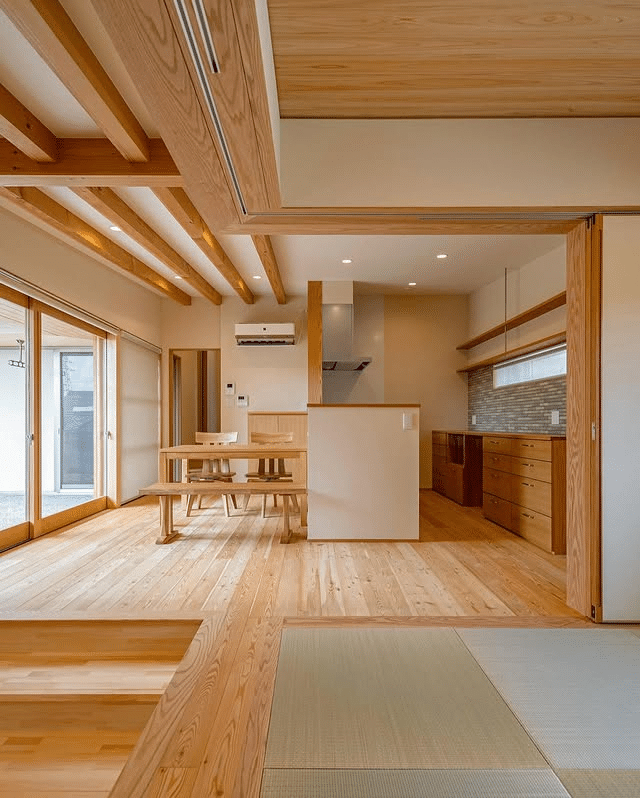
你有没有过这种感觉:周末在家待了一整天,没干什么重活,却比上班还累?
问题可能不在你,在你家——你家太”死”了。
庄子在《逍遥游》里说:”若夫乘天地之正,而御六气之辩,以游无穷者,彼且恶乎待哉!”意思是:顺着天地的正道,驾御六气的变化,遨游于无穷的境界,这样的人,还需要依赖什么呢?庄子称之为”无所待”——什么都不必非有不可,才是真正的自由。
把这句话搬回家:一个让人自由的家,不该是”什么都安排好了”的家,而该是”什么都可以改”的家。
这不是玄学。心理学上有个概念叫”自主感”(autonomy)——人对自己生活环境的掌控程度。研究普遍发现,当人觉得自己能改变环境时,压力水平更低。人面对一个”可以改”的空间,会不自觉地把自己放在”我说了算”的放松姿势里;面对一个”不能改”的空间,则把自己放进”被安排”的紧绷姿势里。更糟的是,当环境被彻底”定死”,人还会产生一种微观层面的无助感:反正改不了,那就别动了。于是你的身体悄悄缩小活动范围,心理也跟着收缩——这种不动声色、持续一整天的紧张,就是”在家待着也累”的真相。
空间有没有”余地”,大脑感觉得到。那怎么给家留出余地?
第一,家具要轻。单人沙发、边几、落地灯,选轻量或带轮的。随手一挪,客厅就能从”会客模式”切到”看电影模式”。能挪的家具,是家里最便宜的”自由”。
第二,留一个”本月功能房”。这个月是书房,下个月铺上垫子做瑜伽,再下个月支张床给朋友。功能不定死,你就有选择权。
第三,留一块白地。客厅或阳台留一块什么都不放的空地。它看上去是浪费,其实是给未来留着决定权——今天想坐地上就坐地上,明天想放个花架就放花架。
第四,定期挪一次家具。不必大动干戈,每个季度把沙发换个方向、把落地灯换个位置。大脑对”家变了”会保持新鲜感,这也是最便宜的空间改造。
庄子说无所待,不是什么都不需要,而是不依赖任何”固定”的东西。一个能随时改变的家,才养得出一个不累的大脑。
你的家不是用来看的,是用来养你的大脑的。
Have you ever had this feeling: you spent a whole weekend day at home, did no heavy work, yet felt more exhausted than after work?
The problem may not be you — it may be your home. Your home is too “dead.”
In “Free Wandering,” Zhuangzi says: “If one rides the rightness of heaven and earth, and drives the changes of the six breaths, to wander through the infinite — what would such a person still depend on?” He calls this “depending on nothing” — only when nothing must be a certain way is there true freedom.
Bring that sentence home: a home that frees you is not a home where “everything is arranged” — it is a home where “everything can be changed.”
This isn’t mysticism. Psychology has a concept called autonomy — the degree to which people feel in control of their living environment. Research consistently finds that when people feel they can change their environment, their stress levels are lower. Facing a space that “can be changed,” people unconsciously settle into the relaxed posture of “I’m in charge”; facing a space that “cannot be changed,” they fold themselves into the tense posture of “being arranged.” Worse, when the environment is completely “locked down,” people develop a micro-level learned helplessness: since nothing can change, why move at all? Your body quietly shrinks its range of activity, and your mind contracts with it — this silent, all-day tension is the truth behind “even staying home is tiring.”
The brain can sense whether a space has “room to maneuver.” So how do you leave room in your home?
First, keep furniture light. Single sofas, side tables, floor lamps — choose lightweight or wheeled pieces. A quick shove and the living room switches from “hosting mode” to “movie mode.” Movable furniture is the cheapest “freedom” in a home.
Second, keep a “room of the month.” This month it’s a study; next month, roll out mats for yoga; the month after, set up a bed for a friend. When the function isn’t fixed, you keep the choice.
Third, keep one patch of blank floor. In the living room or balcony, leave an area with nothing on it. It looks like waste — in fact it’s keeping the right to decide for the future: sit on the floor today if you like, put a plant stand there tomorrow.
Fourth, move the furniture regularly. No need for a big overhaul — every quarter, turn the sofa in a new direction, move the floor lamp to another spot. The brain stays fresh with “the home has changed,” and this is the cheapest space renovation there is.
Zhuangzi’s “depending on nothing” doesn’t mean needing nothing — it means depending on nothing “fixed.” A home that can change at any moment is the only home that raises an untired brain.
Your home is not for looking at — it is for nurturing your brain.