Unity of Heaven and Human: From a Cosmology to a Specific Home | XERLIFE+ Journal
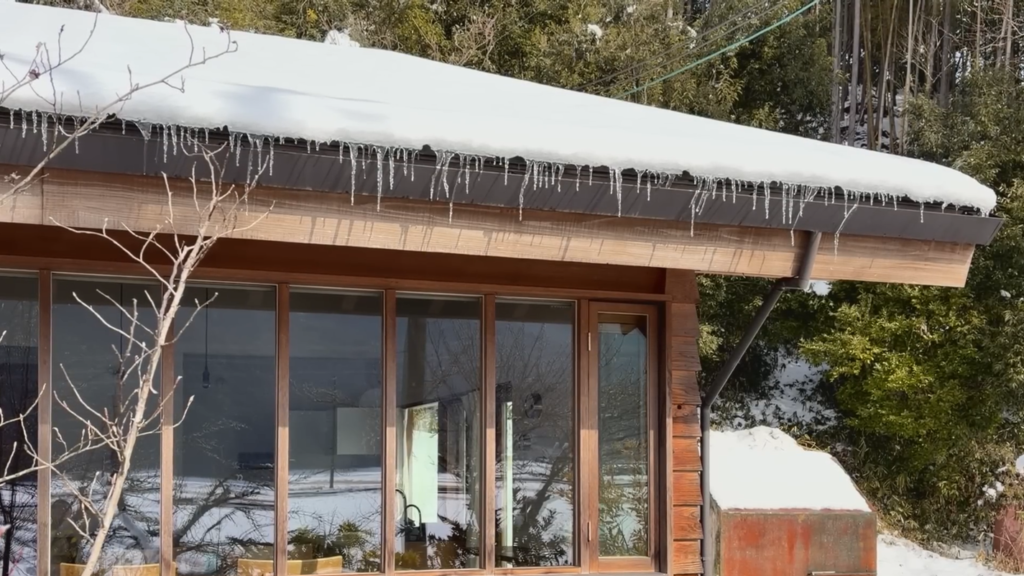
如果把这五篇道家世界观浓缩成一句话,就是:你的家是宇宙在你身上的投影。这不是一句口号,这是整个道家哲学在空间设计中的终极锚点——天人合一。
庄子说:”天地与我并生,而万物与我为一。”在天人合一的视角里,空间不是人和环境的关系,是人和宇宙的同构。你在一个空间里的感受,本质上和一棵树在森林中的感受是同一件事——都在感知自己与更大整体的关系。
现代脑科学用另一个语言说了同一件事。神经科学家发现,人在自然环境中——森林、海边、草原——大脑会进入一种叫”柔和专注”(Soft Fascination)的状态。注意力不用刻意集中,信息自动流入。这和焦虑时的”高度警觉”完全相反——前额叶休息,边缘系统活跃,身体进入修复模式。天人合一的空间,就是把这个状态从野外搬进家里。
怎么搬?三个层次。第一层:时间感知。天人合一的空间让时间变得可感知。不是钟表的时间,是阳光移动的时间、季节变化的时间、木质老化的时间。一扇朝东的窗让你每天被日出叫醒。一株室内植物让你每周看到生长。这些”自然钟”让你的生物节律与天地同步——这是天人合一最底层的生理基础。
第二层:尺度感知。天人合一的空间让你感受到自己的位置——不是渺小,是归属。一面能看到天空的窗、一个能容纳仰望的天花高度、一条能让你走一条”有起承转合”的动线——这些不只是在空间里移动,是在感知”我在天地间的体量”。而当你感知到这种整体关系时,个体的焦虑自然被稀释了——不是因为问题解决了,是因为你的参照系变大了。
第三层:连接感知。天人合一的空间让室内和室外之间有”渗透”而不是”隔绝”。不是大落地窗(那是展示),是让你和外面发生联系的小开口——通风、光影、温度、气味。一阵穿堂风吹过,你知道外面的桂花开了。傍晚的光变得金黄,你知道一天快结束了。这些微小的连接让你不觉得自己被关在一个盒子里,而是活在天地之间。
天人合一不是什么高深的修行。它就是:让你的家有光、有风、有生长的东西、有时间的痕迹。当你站在窗边感受到阳光的温度,当你坐在沙发上看光影慢慢移动,你已经在合一了。
这就是道家·脑神经·空间学的根基。一切具体的技巧——无为、阴阳、自然、无形——都是从这里长出来的。
If these five essays on the Taoist worldview were compressed into one sentence, it would be: your home is the projection of the cosmos onto you. This is not a slogan. It is the ultimate anchor of all Taoist philosophy in spatial design — the unity of heaven and human.
Zhuangzi said: “Heaven and earth were born together with me, and all things are one with me.” In this view, space is not a relationship between person and environment — it’s the isomorphism of person and cosmos. How you feel in a space is essentially the same event as how a tree feels in a forest — both are perceiving their relationship with a larger whole.
Modern brain science says the same thing in a different language. Neuroscientists have found that in natural environments — forests, seashores, grasslands — the brain enters a state called “soft fascination.” Attention need not be forced; information flows in by itself. It is the opposite of the “hypervigilance” of anxiety — the prefrontal cortex rests, the limbic system is active, and the body enters repair mode. A heaven-human-unity space is this state, moved from the wilderness into your home.
How to move it? Three layers. Layer one: the perception of time. A unity space makes time perceptible. Not clock time — the time of sunlight moving, of seasons changing, of wood aging. A window facing east wakes you with sunrise every day. An indoor plant shows you growth every week. These “natural clocks” sync your biological rhythms with heaven and earth — this is the most fundamental physiological basis of unity.
Layer two: the perception of scale. A unity space lets you feel your place — not smallness, but belonging. A window that sees the sky, a ceiling height that allows you to look up, a circulation path with “beginning, development, turn, and resolution” — these aren’t just movement through space; they’re perceiving “my measure between heaven and earth.” And when you perceive this whole relationship, individual anxiety is naturally diluted — not because the problem is solved, but because your frame of reference has grown larger.
Layer three: the perception of connection. A unity space lets inside and outside “permeate” rather than “seclude.” Not a huge floor-to-ceiling window (that’s display) — small openings that connect you to the outside: ventilation, light and shadow, temperature, scent. A draft of cross-ventilation passes through and you know the osmanthus outside has bloomed. The evening light turns golden and you know the day is ending. These tiny connections keep you from feeling locked in a box — you live between heaven and earth.
Unity of heaven and human is not some profound practice. It is simply: let your home have light, have wind, have things that grow, have traces of time. When you stand by the window feeling the warmth of the sun, when you sit on the sofa watching the shadows move slowly — you are already in unity.
This is the root of Taoist-neural-spatial studies. Every specific technique — wu wei, yin-yang, nature, formlessness — grows from here.