Wu Wei Dwelling: The Highest Form of Design Is Not Designing | XERLIFE+ Journal
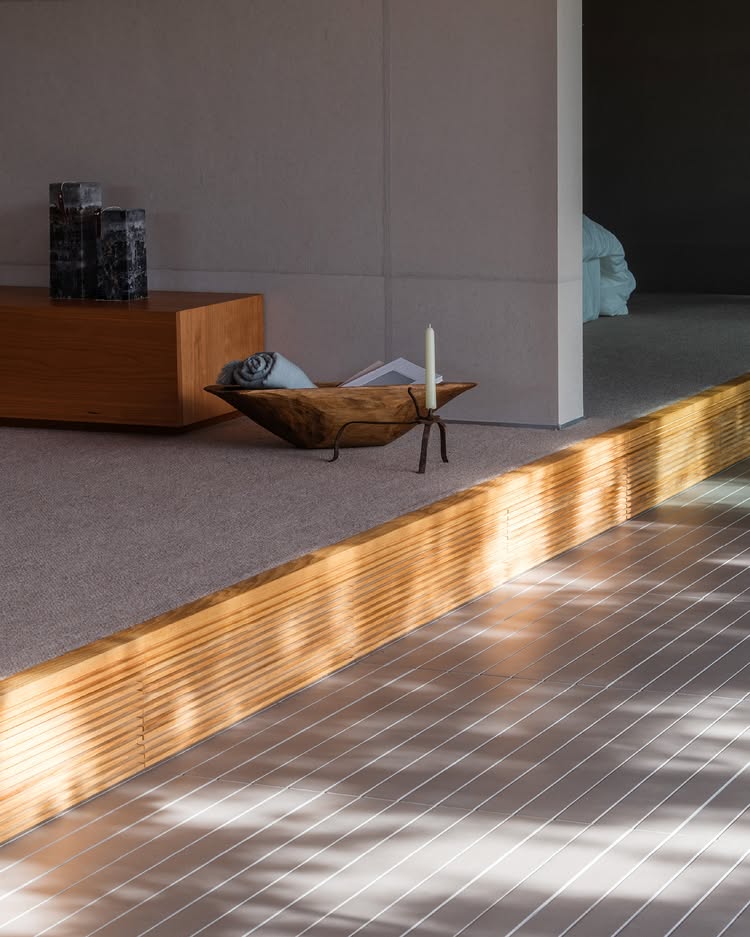
你有没有过这种体验?走进一个精心装修的样板间,每件家具都摆得整整齐齐,每盏灯的角度都被计算过——但你站在里面总觉得别扭,好像这个空间在告诉你”你应该这样坐””你只能从这个角度看”。这不是设计,这是控制。
老子说:”为无为,事无事。”翻译成空间语言:最好的设计,是让人感觉不到设计的存在。这不是叫你别做设计,这是告诉你:设计的目标不是展示设计师的意志,而是让空间自动服务于人的本能。
从脑科学的角度看,”有为”的空间——过度设计、强引导、固定功能——其实是在增加前额叶的认知负荷。你的大脑每时每刻都在处理环境信号:这个角落暗示我需要坐直,那个灯带暗示我需要感觉现代,那些装饰品暗示我应该觉得有品位。每一个暗示都是一道命令,处理这些命令消耗的是你的精神能量。
而无为的空间恰好相反。它不发出命令。它在晒太阳的窗边自然形成一片暖意,你在那里不自觉地坐下来。它在杂物最常出现的动线交叉点预留了一个凹陷,你顺手就把钥匙和快递放在那里。这一切都不是设计师”安排”的,是空间顺着你的本能”长成”这样的。
日本建筑师坂茂有一句话:”建筑不是用来被看见的,是用来被使用的。”无为设计的第一步:观察。不要急着画图,先去观察人在这个空间里实际是怎么活的。动线、停留点、随手放东西的位置、想躲起来的地方。这些才是设计的起点。第二步:顺应。在人的本能流线上做设计,而不是用一个”好看的方案”去框住人的行为。第三步:退场。设计完成的那一刻,设计师应该隐身。让空间自己运转。
这就是道家的”功成身退”。好空间不是一件被观赏的作品,是一场自动运行的自然秩序。
Have you ever had this experience? You step into a meticulously decorated showroom — every piece of furniture perfectly aligned, every lamp angle calculated — yet standing inside it, something feels off, as if the space is telling you “you should sit like this,” “you can only look from this angle.” This isn’t design. This is control.
Laozi said: “Act through non-action; accomplish through non-doing.” Translated into the language of space: the best design is one you don’t notice. This isn’t telling you to skip design. It’s telling you: the goal of design is not to display the designer’s will, but to let the space serve human instinct automatically.
From a neuroscience perspective, “deliberate” spaces — over-designed, heavily directed, fixed in function — actually increase the cognitive load on the prefrontal cortex. Your brain processes environmental signals every moment: this corner hints that I should sit up straight, that light strip hints that I should feel modern, those ornaments hint that I should consider myself tasteful. Every hint is a command, and processing these commands consumes your mental energy.
A wu wei space is the exact opposite. It gives no commands. It naturally forms a patch of warmth by the sunlit window, and you sit down there without thinking. It reserves a hollow at the intersection of your daily traffic where clutter naturally accumulates, and you drop your keys and packages there without a second thought. None of this was “arranged” by a designer — the space “grew” to fit your instincts.
Japanese architect Shigeru Ban once said: “Architecture is not meant to be seen, but to be used.” The first step of wu wei design: observe. Don’t rush to draw — first observe how people actually live in this space. Traffic lines, stopping points, where they naturally put things down, where they want to hide. These are the true starting points of design. Step two: follow the flow. Design along the natural lines of human instinct, rather than boxing behavior into a “beautiful scheme.” Step three: withdraw. The moment the design is complete, the designer should disappear. Let the space run itself.
This is the Taoist principle of “retire after success.” A good space is not a work to be admired — it is a natural order that runs by itself.