Why the Tea Room Calms the Mind | XERLIFE+ Journal
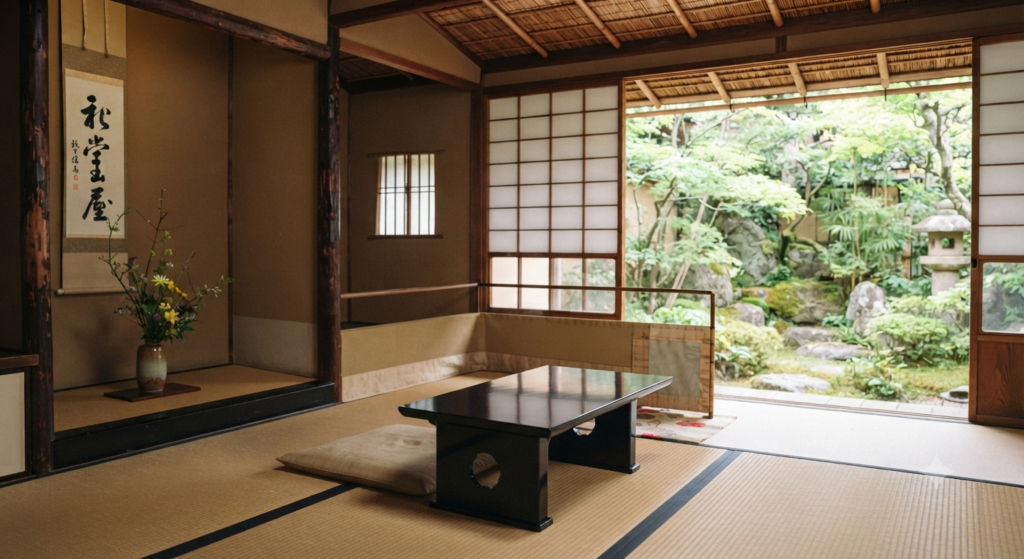
推开茶室那扇低矮的木门,弯腰,低头,进去。从你弯腰的那一刻起,你的大脑已经变了。茶室是一件精心设计的”神经系统介入装置”。
低头门的神经科学
茶室的门只有70厘米高——所有人必须低头弯腰才能进入。这不是为了好看。这是”身体姿态重塑情绪”。当你低头弯腰时,你的身体在做一件事:谦卑。大脑从肌肉反馈中读到”我变小了”的信号。这个信号传递到岛叶皮质,抑制”我的地盘我做主”的自我膨胀感,产生一种叫做”敬畏”的情绪——对空间的敬畏,对时间的敬畏,对此刻的敬畏。敬畏激活深呼吸反应研究发现:敬畏情绪激活迷走神经,降低心率,促进缓慢深呼吸。茶室用一扇低门完成了这个启动。
壁龛里的花
茶室的视觉焦点——壁龛(Tokonoma),只挂一幅字、插一枝花。不是”少”,是”刚刚好只够”。大脑在扫描到壁龛时,只需要处理一个视觉焦点。前额叶发出信号:”我理解了”。这个”理解”的瞬间,多巴胺短暂释放。不是刷手机的碎片多巴胺,是”我在当下”的存在性满足。
茶室的三条可以搬回家的原则
一个降调入口:进门时改变高度或光线的玄关。一个视觉焦点:每个房间只放一个”主角”。五感材料:木头、和纸、陶器、棉麻。把你的书房变成茶室,不是装修——是给大脑做一个开关。
Push open that low wooden door to the tea room, bend down, bow your head, and enter. From the moment you bend, your brain has already changed. The tea room is a meticulously designed “nervous system intervention device.”
The Neuroscience of the Low Door
The tea room door is only 70 centimeters high — everyone must bow and bend to enter. This isn’t for aesthetics. This is “body posture reshaping emotion.” When you bow and bend, your body is doing one thing: humility. The brain reads the signal “I have become smaller” from muscle feedback. This signal travels to the insular cortex, suppressing the ego-inflation sense of “my territory, my rules,” and generating an emotion called “awe” — awe of the space, awe of time, awe of this moment. Research on awe-induced deep breathing has found: awe activates the vagus nerve, lowers heart rate, and promotes slow deep breathing. The tea room accomplishes this activation with a single low door.
The Flower in the Alcove
The tea room’s visual focal point — the tokonoma (alcove) — holds only one hanging scroll and one flower. It’s not “minimal”; it’s “just enough.” When the brain scans the tokonoma, it only needs to process one visual focal point. The prefrontal cortex signals: “I understand.” In this instant of “understanding,” dopamine is briefly released. Not the fragmented dopamine of scrolling through your phone, but the existential satisfaction of “I am here, now.”
Three Tea Room Principles You Can Bring Home
A descending entrance: an entryway that changes height or light upon entering. One visual focal point: only one “protagonist” per room. Five-sense materials: wood, washi paper, pottery, cotton-linen. Turning your study into a tea room isn’t renovation — it’s installing a switch for your brain.