I am no longer an architect chasing “beautiful.” I am a space frequency tuner—using space to modulate brain frequencies. Every XERLIFE+ project asks the same question: can this space return the brain to its most natural, relaxed state?
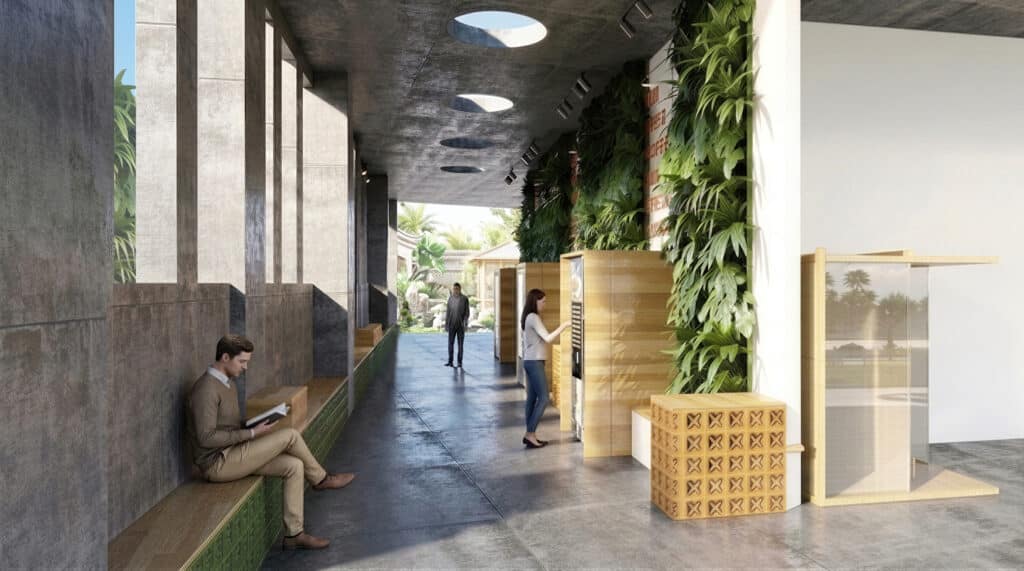
很多人问我:做了二十年建筑设计,为什么转型?答案很简单:我开始关注”人进去之后发生的事”。
我职业生涯的前十五年,追求的是”好看”。立面比例、空间序列、材料质感、光影效果——这些是当时衡量设计好不好的标准。甲方满意、同行认可、偶尔拿个奖。但有个问题一直隐隐存在:我从来没问过住在里面的人——你感觉怎么样?
转折点来自一次走进自己设计完的项目。空间是漂亮的,照片角度完美。但我站在里面,觉得不舒服。不是身体不舒服,是一种更深层的不安。那天晚上我翻遍了文献,找到了改变我方向的一篇研究:环境神经科学(Environmental Neuroscience)。
接下来几年,我系统读了脑科学、神经美学、环境心理学。哈佛的 Esther Sternberg 团队发现自然景观观看三分钟就能显著降低皮质醇。日本千叶大学的研究显示森林浴能提升 NK 细胞活性达一周。伊利诺伊大学的 Frances Kuo 证明绿色视野能加速儿童注意力缺陷恢复。这些研究告诉我同一个结论:空间不是中性的背景板,它是活跃的神经系统调制器。
道家的”有无相生””顺其自然””大巧若拙”——不是文学修辞,是可以被精确执行的空间操作规则。留白等于降低认知负荷。顺势等于匹配生物节律。无为等于减少感官竞争。自然等于激活副交感神经。两千年前的道家智慧,完美预言了现代神经科学的每一个发现。
我不再是一个追求”好看”的建筑师。我是一个空间调频师——用空间调节大脑频率。XERLIFE+ 的每一个项目,都在回答同一个问题:这个空间能让大脑回到最自然的放松状态吗?
这不是风格问题。是科学问题。
Many people ask me: after twenty years in architecture, why pivot? The answer is simple: I started paying attention to what happens after a person walks in.
The first fifteen years of my career, I chased “beautiful.” Facade proportions, spatial sequencing, material textures, light and shadow effects—these were how we measured good design. Happy clients, peer recognition, the occasional award. But a question kept gnawing at me: I never once asked the people living inside—how do you feel?
The turning point came when I walked into a project I had designed. The space was beautiful—picture-perfect from every angle. But standing inside, I felt uncomfortable. Not physically—something deeper, a quiet unease. That night I devoured the literature and found a paper that changed my direction: Environmental Neuroscience.
Over the following years, I systematically studied brain science, neuroaesthetics, and environmental psychology. Harvard’s Esther Sternberg team found that just three minutes of viewing a natural landscape significantly lowers cortisol. Chiba University’s research showed that forest bathing boosts NK cell activity for a week. University of Illinois’ Frances Kuo demonstrated that green views accelerate attention recovery in children with ADHD. These studies all told me the same thing: space is not a neutral backdrop—it’s an active nervous system modulator.
Taoist concepts—”being and non-being give rise to each other,” “follow nature’s course,” “great skill appears clumsy”—these are not literary flourishes. They are precisely executable spatial rules. Void equals reduced cognitive load. Flow equals circadian alignment. Wu-wei equals minimized sensory competition. Nature equals parasympathetic activation. Two-thousand-year-old Taoist wisdom perfectly foretold every modern neuroscientific discovery.
This is not a question of style. It’s a question of science.
Related Reading