This is what XERLIFE+ is here to do.
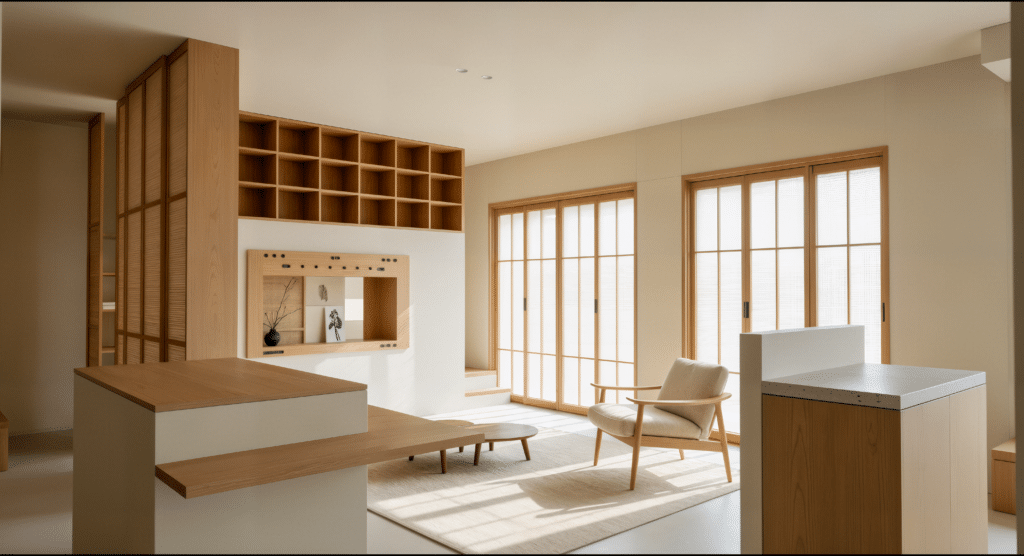
做了二十年建筑设计,我见过太多漂亮的空间。获奖的、杂志封面的、甲方满意的。但我逐渐发现一个问题:一个空间可以看起来很厉害,却让你在里面感到不舒服。
这就是我开始追问的起点:空间对人的大脑,到底做了什么?
在神经科学的框架里,每一个空间变量——色彩、光线、材质、比例、声学——都在向你的神经系统传递信号。杂乱的环境让杏仁核持续激活,造成慢性焦虑。刺眼的冷光推高皮质醇,让身体进入应激状态。不规则的动线迫使前额叶持续处理不确定性,导致认知疲劳。
反过来呢?柔和的自然光刺激血清素分泌,情绪稳定。木材的触感和温度降低交感神经激活,身体放松。清晰的动线和留白减少认知负荷,思维恢复清晰。这些不是玄学。哈佛医学院、伊利诺伊大学、日本千叶大学都有大量研究证明:物理空间直接影响神经递质、应激激素和脑波频率。
但脑科学只能告诉你”发生了什么”,不能回答”为什么这样做”。这就回到了中国文化最深的那口井——道学。道家的核心概念,其实是极其精准的空间操作方法。留白不是缺少,是给前额叶腾算力。顺势不是妥协,是不跟自然光和人体动线较劲,节约大脑能耗。无为不是不做,是让空间退后,让人成为主角。
我把这两条线——道家空间哲学与脑科学感官调频——合成为一套方法论:道家 · 脑神经 · 空间学(Tao-Neuro Spatial Studies)。它不追求第一眼的惊艳。它追求你走进去之后,呼吸自动深下去,肩膀自动松下来,心率回到舒服的节奏。空间对大脑的善意,比任何装修风格都重要。
这就是 XERLIFE+ 在做的事。
After twenty years in architectural design, I’ve seen my fair share of beautiful spaces—award-winning, magazine-cover, client-approved. But I gradually noticed a problem: a space can look spectacular yet feel deeply uncomfortable to be in.
That was the beginning of my inquiry: What exactly does space do to the human brain?
In the framework of neuroscience, every spatial variable—color, light, material, proportion, acoustics—is sending signals to your nervous system. Clutter keeps the amygdala activated, causing chronic anxiety. Harsh cold light raises cortisol, pushing your body into stress mode. Irregular circulation forces the prefrontal cortex to keep processing uncertainty, leading to cognitive fatigue.
And the reverse? Soft natural light stimulates serotonin, stabilizing mood. The warmth and texture of wood reduce sympathetic nervous system activation, allowing the body to relax. Clear circulation and intentional void reduce cognitive load, restoring mental clarity. This isn’t mysticism. Research from Harvard Medical School, the University of Illinois, and Japan’s Chiba University all confirm: physical space directly affects neurotransmitters, stress hormones, and brainwave frequencies.
But neuroscience can only tell you “what happens”—it can’t answer “why do it this way.” That brought me back to the deepest well in Chinese culture: Taoism. Its core concepts are, in fact, remarkably precise spatial operating manuals. Void is not absence—it’s freeing up processing power for the prefrontal cortex. Going with the flow is not compromise—it’s aligning with natural light and human movement to save brain energy. Wu-wei is not inaction—it’s letting the space step back so the human steps forward.
I’ve woven these two threads—Taoist spatial philosophy and neuroscientific sensory tuning—into a single methodology: Tao-Neuro Spatial Studies. It doesn’t chase the wow of first glance. It pursues the moment you walk in, when your breath automatically deepens, your shoulders drop, and your heart rate returns to a comfortable rhythm. A space’s kindness to your brain matters more than any design style ever could.
Related Reading