The Utility of Emptiness: Finding the Healing Soul in Architectural Void | XERLIFE+ Journal
湖南大学建筑系老系楼的门口,墙上刻着这样一段话:“埏埴以为器,当其无,有器之用。凿户牖以为室,当其无,有室之用。”
At the entrance of the old architecture building at Hunan University, an inscription greets every visitor: “Clay is molded to form a vessel, but it is on its hollow interior that the utility of the vessel depends. Doors and windows are cut out to create a room, but it is on its empty space that the utility of the room depends.”
这句话出自老子《道德经》第十一章。它深刻地揭示了一个真理:当我们制作陶器时,真正起作用、能盛放水的,是中间那个“空虚”的部分;当我们开凿门窗建造房屋时,真正能供人居住,也是被墙体围合出来的虚空。
Originating from Chapter 11 of the Tao Te Ching, this sentence reveals a profound truth: when we craft a vessel, it is the void within that holds the water; when we build a house, it is the space enclosed by the walls that provides a true dwelling.
理解它并不容易,这需要漫长的设计实践去体悟。在道家的世界观里,“无”不是空洞,而是包容万物的容器。墙体是实,空间是虚;实体是手段,虚空才是目的。
True understanding of this wisdom comes through years of architectural practice. In the Taoist worldview, “Wu” (nothingness) is not a vacuum but a vessel for all things. The wall is solid, and the space is void; the solid is merely a means, while the void is the ultimate purpose.
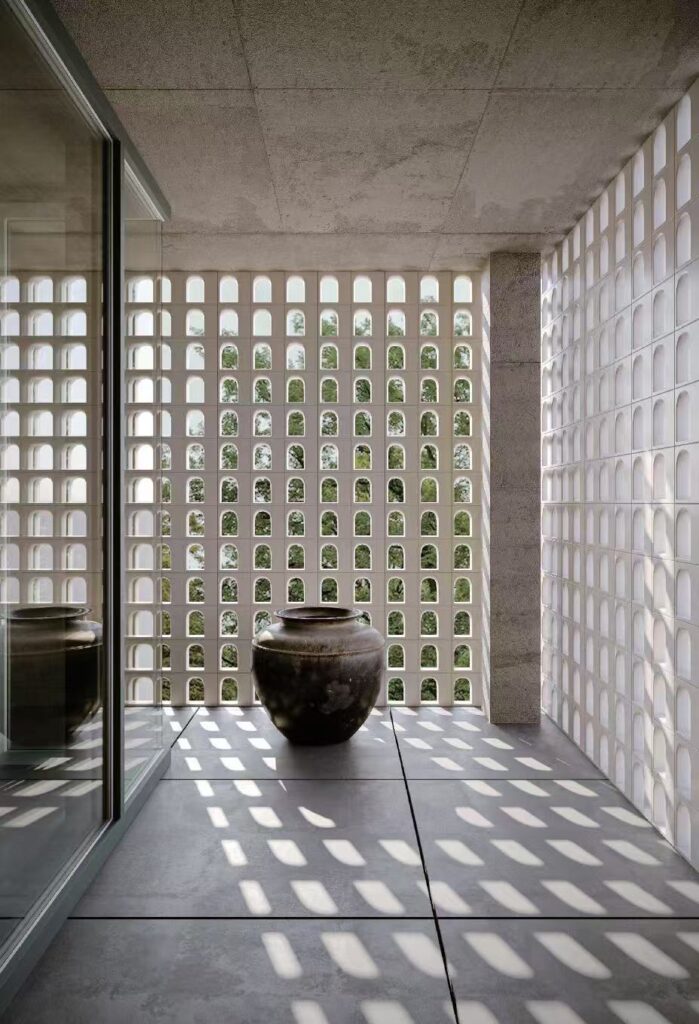
作为建筑师,我们手下画的是墙,但心中营造的却是那个空间。这种“虚实相生”,就像中国画里的留白,不是为了省墨,而是为了让画作呼吸。而一个空间是否动人,不在于你堆砌了多少装饰,而在于你留下了多少“气”的通道。
As architects, while we draw walls with our hands, we craft the space with our hearts. This interplay of solid and void is akin to the “white space” in traditional Chinese painting—it is not an absence, but a way to let the work breathe. The resonance of a space lies not in its decorative layers, but in the channels created for “Qi” to flow.
当我们懂得让实体退后,光线、微风与人的思绪才能在“虚”中自由流动。这种流动的感官体验,才是空间真正能安顿灵魂、治愈身心的力量所在。
When the physical structure recedes, light, breeze, and human thought can flow freely within the void. This fluid sensory experience is the true power of architecture—to anchor the soul and provide a sanctuary for deep healing.